By Atalia Vilas, Compensation & Benefits Manager.
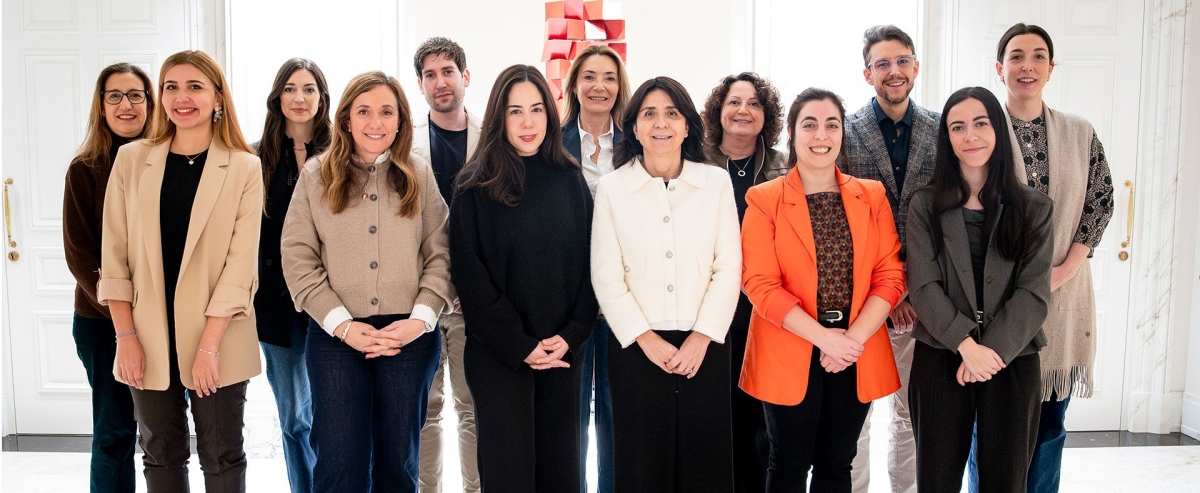
I recently took part in the professional breakfast organized by Equipos y Talento under the title “Workplace flexibility: balancing productivity and wellbeing.”
It was an enriching space for reflection in which leaders from Talent, Compensation & Benefits, and Communications shared experiences on work–life balance, hybrid models, and organizational sustainability.
However, the discussion left one clear takeaway: when we talk about workplace flexibility, we often think only about office-based work.
And in sectors that are fundamentally operational—like ours—that perspective falls short.
Beyond Remote Work
Remote work is a valuable tool when the nature of a role allows it. If work can be assessed by results rather than presence, being physically on‑site ceases to be essential.
But not all jobs happen behind a computer.
Moreover, after the massive adoption of remote work during the pandemic, many organizations are now shifting toward more balanced hybrid models, aware of the need to strengthen culture, cohesion, and teamwork.
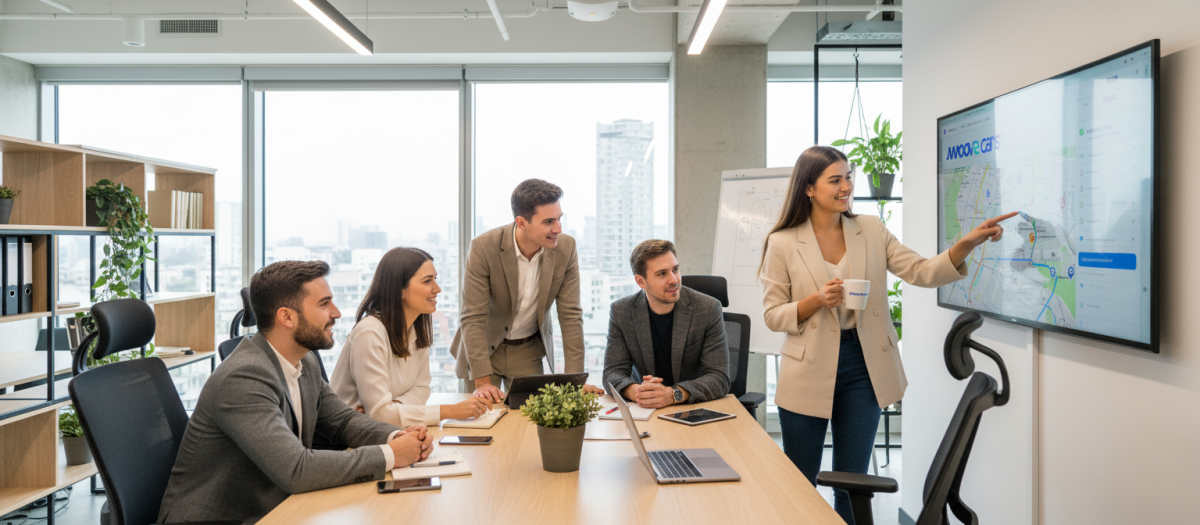
In companies like Moove, where the productive core is made up primarily of drivers, mechanics, and operational staff, flexibility must be approached differently. They are the ones who sustain daily operations and make the business possible. Without their work, there would be no technology to optimize or data to analyze.
This is why the challenge is not to replicate hybrid models designed for office work, but to redefine what it means to be flexible in an operational environment.
Flexibility as Autonomy and Dignity
In operational teams, flexibility is not about working from home. It is about having greater control over one’s time and personal needs within a clear organizational framework.
It means being able to swap a shift when personal circumstances require it, having tools that make it possible to balance personal life and work without the only alternatives being taking leave or resigning, enabling access to meaningful benefits, as well as offering clear information and support in processes as basic as understanding one’s payslip.
Ultimately, it means treating flexibility as a structured and accessible system—not as a privilege reserved for certain roles, but as a cross‑cutting organizational principle.
This is not about privilege. It is about modernization and labor dignity.
Transforming the Business Requires Transforming from Within
Moove Cars has evolved from a traditional VTC model to a broader vision of sustainable, technology‑driven mobility. This transformation cannot be limited to the fleet or to digitalization. It must also be reflected in how we understand operational work.
There is a common belief that greater wellbeing results in lower performance. This is a myth we must overcome. Sustainable productivity does not arise from constant pressure, but from the balance between new challenges, stability, and commitment.
Investing in well‑designed flexibility is not a concession; it is a strategic decision in a competitive, highly pressured market. Companies capable of building models that are demanding yet human will have a real advantage in attracting and retaining talent.
The equation is simple: wellbeing fuels commitment, and commitment fuels productivity.
Modernizing the sector is not only about incorporating new technologies or business models. It is about professionalizing the experience of those who make it possible every day.
The modernization of the sector does not begin with technology. It begins with the people who sustain it every day.
Atalia Vilas, Compensation & Benefits Manager.